
Hidden Holiday Expenses: Budget Tips & Credit Card Debt
Updated November 2026 · Debt Redemption Texas Debt Relief · Serving Texas since 2002
Explore Your Debt Relief Options →You’ve bought the presents and stayed close to your budget. Then comes the grocery run for Thanksgiving, the school gift exchange and the trip to see family. By December, the credit card has picked up several things that were never on the shopping list.
That’s an easy detail to miss when you’re planning for the holidays. You know roughly what the gifts will cost. Feeding extra people, filling the gas tank again and mailing a package can be harder to pin down.
Before you start shopping, give those expenses a place in the budget too.
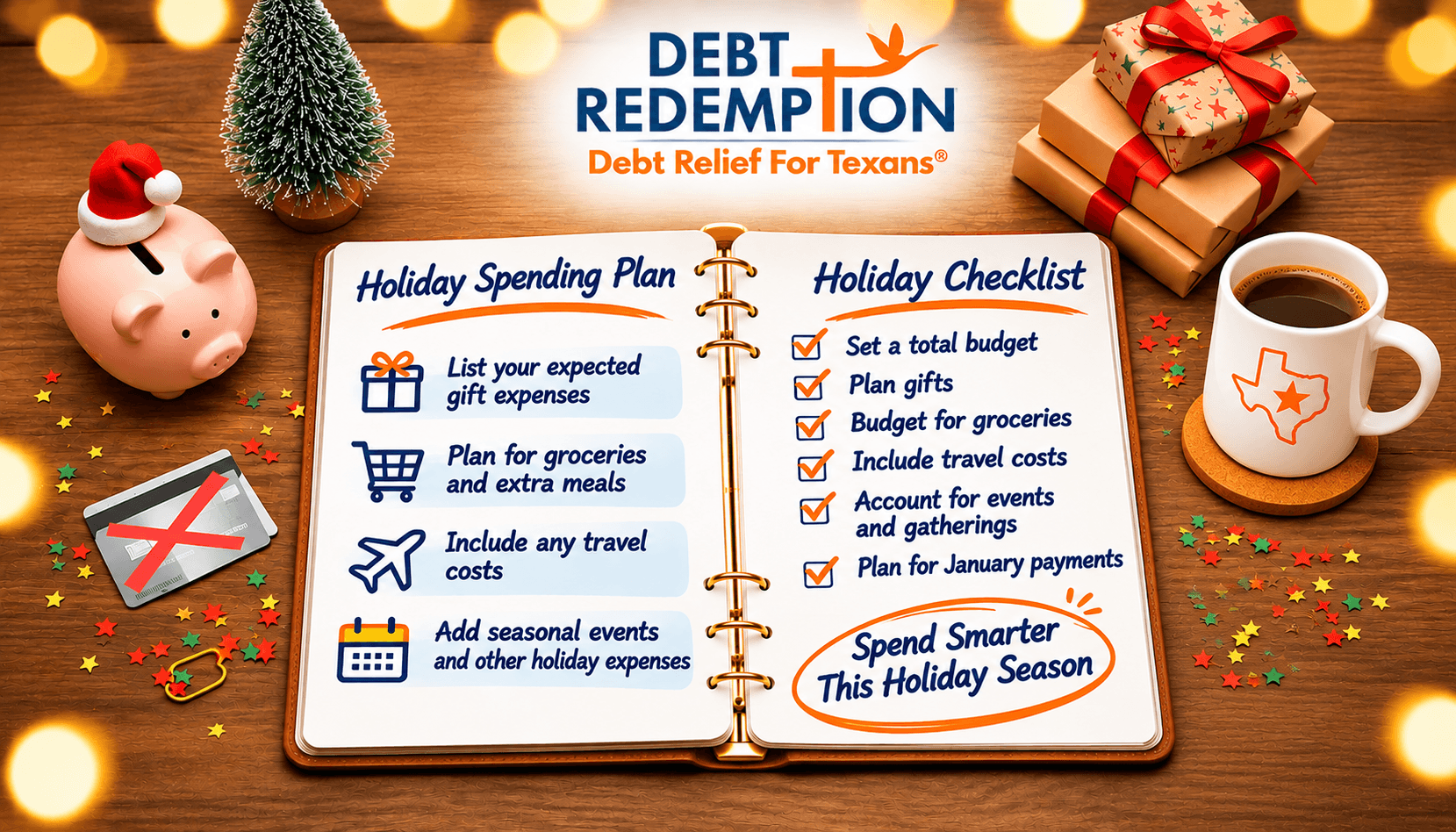
What else is on the calendar
Look through your plans for November and December. If you’re visiting family, include travel and anything you’ll bring with you. If people are staying at your house, allow for the extra meals. Add the school events, workplace exchanges, wrapping supplies and shipping.
You don’t need a perfect estimate. A rough number beside each plan will tell you more than a gift list alone.
Then look at what you can spend after your regular bills, essentials and existing debt payments. Leave an unconfirmed bonus out of the calculation. If it arrives, you can decide what to do with it then.
Work out the gift budget after that
Say you have $500 available for the season. A trip will cost $150, and the extra groceries will take another $100. That leaves $250 for gifts and anything else you haven’t counted. These figures are an example, not a suggested household budget.
Example: Planning a $500 Holiday Budget
| Expense | Amount |
|---|---|
| Available holiday budget | $500 |
| Travel | -$150 |
| Extra groceries | -$100 |
| Remaining for gifts and other expenses | $250 |
Illustrative example only. This is not a suggested household budget.
If that leaves less than you expected, you still have choices. Drawing names among adults might work better than buying for everyone. You could split the cost of a meal or agree on one gift for each household.
It helps to say something before people start buying: ‘Could we set a smaller gift limit this year? We’re trying to keep the holidays within our budget.’ You don’t owe anyone a detailed explanation of your finances.
Put the January installments on the calendar now
A pay-later plan can spread out a purchase, but every installment still needs to fit. Write down all the due dates, including the ones in January, and check what else comes out of those paychecks.
The Consumer Financial Protection Bureau notes that even plans without interest can have late fees. Automatic withdrawals can also lead to bank fees if the money isn’t there. Read the terms before agreeing, rather than relying on the size of the first payment.
You might decide to buy something smaller or wait until another installment plan is finished. Either choice gives the next paycheck a little more room.
When existing debt leaves very little to spend
Sometimes you’ve already cut back, and there still isn’t much left. If credit card or personal loan payments use up most of the money after essentials, it may help to look at the balances themselves.
Debt settlement is one option for Texans who are having difficulty repaying substantial unsecured debt. It seeks agreements to resolve eligible balances for less than the amount owed, without taking out another loan. A review can help you understand whether your accounts and available funds make that approach worth considering.
There are costs and tradeoffs. Settlement will likely negatively affect credit, and creditors can continue collections or file lawsuits. Compare the proposal with creditor hardship arrangements, nonprofit credit counseling and a consolidation loan through a lender. The complete disclosure below explains additional settlement considerations.
Explore Your Debt Relief Options in Texas
At Debt Redemption, you can talk through what you owe, what the payments are leaving you each month and how settlement would work. We’re Veteran-Founded and serve Texas residents only.
Call 800-971-4060 or visit DebtRedemption.com for a free, no-obligation consultation.
Bring your questions; you can review the options before deciding whether to enroll.
Common questions
What should a holiday budget include besides gifts?
Include travel, extra food, school activities, gatherings, shipping and wrapping. Account for those expenses before deciding how much is available for presents.
How do I budget for holiday buy now pay later purchases?
Put every installment beside your paydays and regular bills, including payments due after December. Check the full purchase price and fee terms before committing.
What if existing debt payments leave no room for holiday spending?
Review your existing balances and payment options before adding another obligation. Depending on your finances, those options may include creditor hardship help, credit counseling, consolidation through a lender or debt settlement.
Educational sources
- Consumer.gov — Making a Budget
- CFPB — Do Buy Now, Pay Later Loans Have Fees?
- CFPB — Credit Counseling, Debt Settlement and Consolidation
This article provides general financial education and is not individualized financial, tax, or legal advice.
Important Debt Redemption Disclosure
Debt Redemption’s settlement fee is 15% of enrolled debt, compared with up to 25% charged by many competitors. Our fee for each debt is collected only after settlement and the first settlement payment. Third-party special purpose account (SPA) fees are $10.95 for setup and $10.95 monthly. Results and timelines depend on creditors, available funds, and program completion; savings and completion dates are not guaranteed. Creditors are not required to settle. Debt settlement will likely negatively affect credit; creditors may continue collections or file lawsuits, and interest and fees may increase balances. Forgiven debt may be taxable; consult a tax professional. Debt Redemption is not a lender; loan offers are available through an affiliate platform, subject to lender approval. We do not assume debts, make regular creditor payments, provide credit repair, or give tax, bankruptcy, accounting, or legal advice. Optional legal services are extra and separate, with fees paid directly to the providers. Programs are available only in Texas. See our FAQs for details. Logos belong to their respective owners.
Debt Redemption Texas Debt Relief — serving Texas consumers since 2002.
As seen onAll consultations are free with no obligation.