
Buy Now, Pay Later Adding Up? Texas Debt Relief Options
Updated November 2026 · Debt Redemption Texas Debt Relief · Serving Texas since 2002
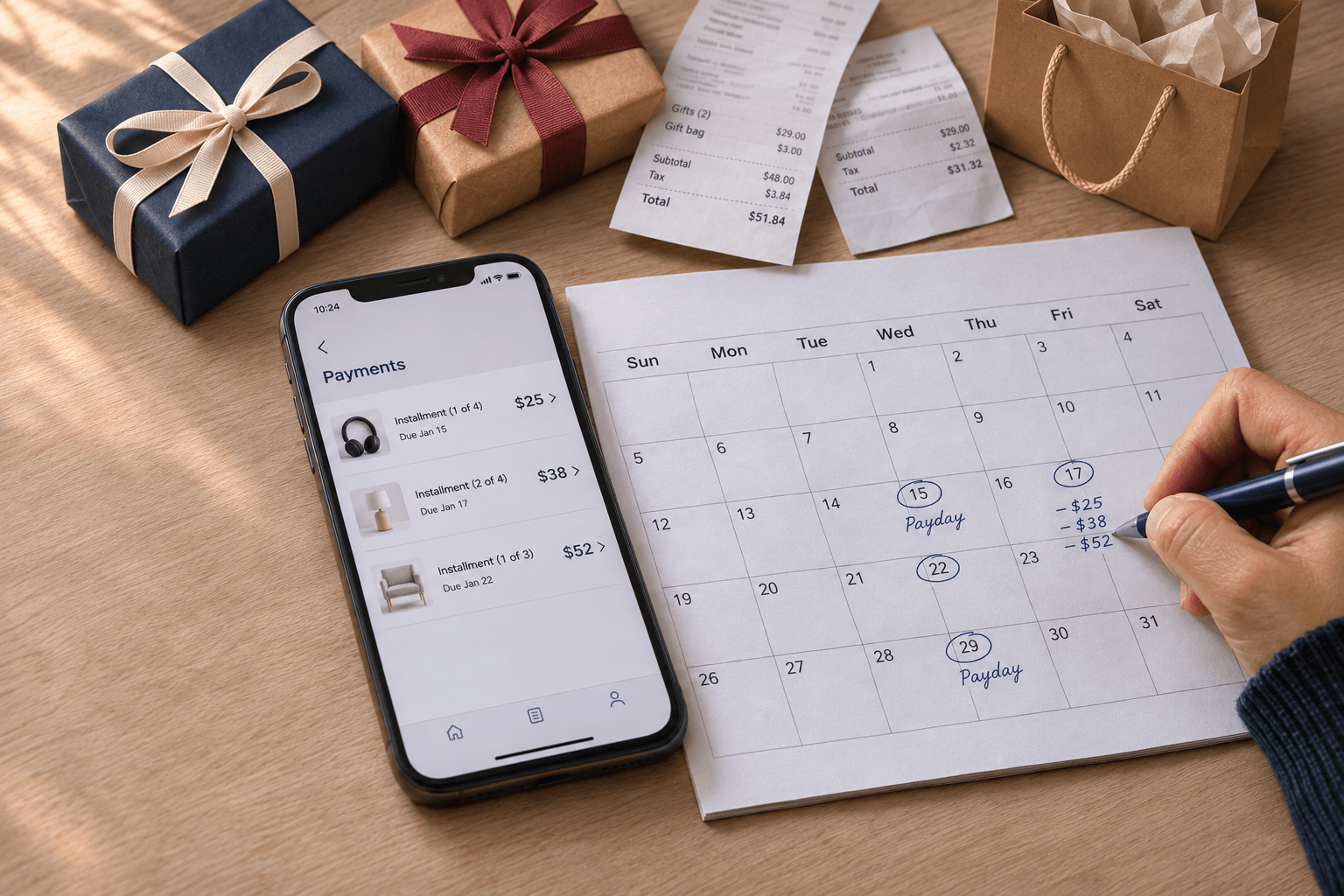
Explore Debt Relief Options →You check the next payment: $25. That seems manageable. There’s also a $38 installment in another app and a $52 payment due Friday.
Now $115 is coming out of the same paycheck, before groceries, gas and the bills you already had.
It’s easy to see how this happens. Each purchase comes with its own payment schedule, but the money usually comes from the same account. Checking each app separately doesn’t always show how much of your next paycheck is already spoken for.
Putting those dates together can help you decide whether another purchase fits—and what to do if the payments are getting difficult to cover.
See what comes out before your next payday
Start with the money available in your account today. Write down your next two paydays and the take-home pay you reasonably expect.
Then add the expenses that money needs to cover: housing, utilities, insurance, groceries, transportation, childcare and existing debt payments. Include subscriptions and other automatic withdrawals.
Open each installment plan and add every remaining payment on its actual withdrawal date. Don’t rely on memory or assume a payment due every two weeks will line up with your paydays.
Work through the calendar in order. Add income when it arrives, subtract expenses when they’re due and carry the balance forward. You may find that some money from this paycheck needs to stay in the account for a bill due later.
A paper calendar works. So does a simple spreadsheet. Use whichever one you’ll actually check before buying something.
Small payments still need room in the budget
Suppose five installments of $25, $38, $52, $45 and $60 are due before your next payday. Together, they total $220.
That’s a hypothetical example, not a typical household budget or customer result. The same calculation works with your own payments: add them together, then check what remains after your other commitments.
If there’s very little left, consider waiting until one plan is paid off before starting another. You might also choose a smaller purchase or set money aside for it over a few paychecks.
Overlapping plans aren’t unusual. A CFPB report published in January 2025 found that approximately 63% of borrowers in its study had multiple simultaneous BNPL loans at some point in 2022. The research covered six large providers and describes historical borrowing, rather than current activity among Texas households.
For your budget, the useful number is the total coming out of your own account.
Read past the first payment
Before accepting a plan, check the full purchase price, every payment date, any interest and the rules for missed payments.
Some interest-free plans charge late fees. Automatic withdrawals can also lead to bank fees when there isn’t enough money in the account. Unpaid balances may go to collections, and missed payments could affect credit if payment information is reported.
If you can see a shortfall coming, contact the provider before the due date. Ask whether a payment-date change or hardship arrangement is available, and confirm any agreement before relying on it. Moving the date may help with timing, but you’ll still owe the balance.
When the larger balances need attention
Sometimes the calendar shows that the problem goes beyond a few installment purchases. Credit card and personal loan payments may already be taking most of what’s left after essentials.
That’s a reasonable time to ask for help reviewing the debt.
Debt settlement may be worth considering when eligible unsecured balances have become difficult to repay in full, but you can set aside money toward negotiated agreements. It seeks a creditor’s agreement to resolve a debt for less than the outstanding balance, without taking out another consolidation loan.
You can negotiate directly with creditors or work with a settlement company. At Debt Redemption, specialists can review your accounts, explain the funding needed and help negotiate proposed settlements for you to review and approve. BNPL balances are not automatically eligible.
Settlement has costs and tradeoffs. It will likely negatively affect credit; creditors are not required to settle and may continue collections or file lawsuits. Interest and fees may increase balances, and forgiven debt may be taxable. Any overall savings depend on the agreements reached, costs and completing the required payments.
Compare that approach with creditor hardship arrangements, nonprofit credit counseling and consolidation through a lender. Debt Redemption is not a lender. A qualified Texas bankruptcy attorney can explain legal options where appropriate.
Talk through what the payments look like now
You don’t need a perfectly organized spreadsheet to start a conversation. Your recent statements and a rough picture of your income and essential expenses give you something useful to discuss.
Debt Redemption is Veteran-Founded and serves Texas residents exclusively. Our specialists can explain which unsecured debts may qualify, what settlement would involve and how its costs fit into your budget.
Call 800-971-4060 or visit https://www.debtredemption.com/ for a free, no-obligation consultation. You can ask questions and review the options before deciding whether to enroll.
Results vary. Not all debts or financial situations qualify.
As seen on Good Morning Texas, Texas Today, Great Day Houston, Great Day SA, We Are Austin and Daytime.
Frequently asked questions
How do I budget for several buy now, pay later plans?
Put every remaining installment on one calendar with your paydays, regular bills and everyday expenses. Add income and subtract expenses in date order to see what remains before the next paycheck.
Can interest-free installment plans still cost extra?
Yes. Late fees may apply under the agreement. An automatic withdrawal can also trigger bank fees if the account doesn’t have enough money.
How many installment plans are too many?
There’s no universal number. Check whether the combined payments leave enough for essentials, existing obligations and unexpected expenses. Even a few plans can be difficult to manage when their payments fall together.
Can BNPL balances qualify for debt settlement?
Eligibility depends on the specific account, creditor, program and your circumstances. Have the balance reviewed before assuming it can be included. Creditor acceptance and settlement outcomes are not guaranteed.
Educational sources
- CFPB — Consumer Use of Buy Now, Pay Later and Other Unsecured Debt, January 2025
- CFPB Do Buy Now, Pay Later Loans Have Fees?
- CFPB — Credit Counseling, Debt Settlement and Consolidation
- Consumer.gov — Making a Budget
This article provides general financial education and is not individualized financial, tax, or legal advice.
Important Debt Redemption Disclosure
Debt Redemption’s settlement fee is 15% of enrolled debt, compared with up to 25% charged by many competitors. Our fee for each debt is collected only after settlement and the first settlement payment. Third-party special purpose account (SPA) fees are $10.95 for setup and $10.95 monthly. Results and timelines depend on creditors, available funds, and program completion; savings and completion dates are not guaranteed. Creditors are not required to settle. Debt settlement will likely negatively affect credit; creditors may continue collections or file lawsuits, and interest and fees may increase balances. Forgiven debt may be taxable; consult a tax professional. Debt Redemption is not a lender; loan offers are available through an affiliate platform, subject to lender approval. We do not assume debts, make regular creditor payments, provide credit repair, or give tax, bankruptcy, accounting, or legal advice. Optional legal services are extra and separate, with fees paid directly to the providers. Programs are available only in Texas. See our FAQs for details. Logos belong to their respective owners.
Debt Redemption Texas Debt Relief — serving Texas consumers since 2002.
All consultations are free with no obligation.